
"Ecuador coffee origins"
700 article(s) found
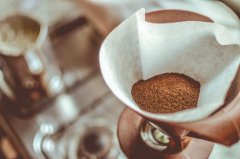
Grading, price, raw bean and baking curve of single bean in Santa Cruz Manor, Ecuador
For professional baristas, please pay attention to the coffee workshop (Wechat official account cafe_style) Ecuador Santa Cruz Manor single bean classification, price, raw beans and baking curve Ecuador's superior geographical location, fertile soil and special climatic conditions have created a superior natural environment for coffee cultivation in the country. Ecuador is one of the few countries in the world that can produce Allah at the same time.

A brief introduction to the unique history and culture of the origin and development of coffee in the Galapagos Islands
In 1875, 340 years after Freitoma de Belanga discovered the island, a native named Kovos came to St. Cristobal, where he established the Hasunda Coffee Garden and planted about 100 hectares of Arabian bourbon coffee trees. Since the plantation is located between 140m and 275m above sea level, the climate is equivalent to that of 915m ~ 1830 m in the interior.

Introduction of Ecuador Galapagos Coffee Flavor Manor with unique flavor
Central mountain: after entering Ecuador from Colombia, the Andes is divided into the eastern and western Cordillera mountains, with a plateau high in the north and low in the south, averaging between 2500 and 3000 meters above sea level. The Andes run through the middle of the border. The ridges crisscross, dividing the plateau into more than ten intermountain basins. The most important are the Quito basin and the Cuenca basin in the south. Volcanic crowds in the territory

Introduction of Santa Cruz Manor in Ecuador Coffee Manor with Natural planting Environment
As coffee is consumed by people all over the world, the world coffee industry is also moving towards mass production, while St. Cristobal, a small and unreliable coffee industry, is in trouble and is likely to be forced to give up without profit. It wasn't until the early 1990s that the Gonzalez family bought Hasunda Coffee Park. Humboldt current (HumboldtCurr

A brief introduction to the Origin, Development, History and Culture of Santa Cruz Manor boutique Coffee beans
As coffee is consumed by people all over the world, the world coffee industry is also moving towards mass production, while St. Cristobal, a small and unreliable coffee industry, is in trouble and is likely to be forced to give up without profit. It wasn't until the early 1990s that the Gonzalez family bought Hasunda Coffee Park. Humboldt current (HumboldtCurr

Introduction to the taste of boutique coffee in Santa Cruz Manor, Ecuador
Because of the unique role of the Galapagos Islands in the course of history, the Government of Ecuador has designated the Galapagos Islands as a national park, the land is no longer allowed to be reclaimed as new agricultural land, and the introduction and use of chemical fertilizers, pesticides, herbicides and other chemicals are strictly prohibited, so coffee produced in the Galapagos Islands is recognized as a natural product. Ecuador ES Coffee South Ecuador

Fruit aroma of Ecuadorian Coffee Manor flavor and taste characteristics of boutique coffee beans
Ecuador is divided into the western coast, the central mountains, the eastern Amazon River basin and the four central regions of the Galapagos Islands, with diverse climatic conditions. The western coastal plain belongs to the tropical rain forest climate, with an average temperature of 23-25 ℃. The central Andes. The intermountain basin in this area belongs to the savanna climate, and the mountain belongs to the subtropical forest climate, with perennial snow above 4000 meters above sea level. Annual average decline

A brief introduction to the History and Culture of the Origin and Development of Galapagos Fine Coffee beans with Sweet Sour
In 1875, 340 years after Freitoma de Belanga discovered the island, a native named Kovos came to St. Cristobal, where he established the Hasunda Coffee Garden and planted about 100 hectares of Arabian bourbon coffee trees. As the plantation is located between 140m and 275m above sea level, the climate is equivalent to that between 915m and 1830 m in the interior.

Characteristics of flavor and taste of growing altitude varieties in SHB producing area of Ecuadorian coffee
Professional coffee knowledge exchange more coffee bean information please follow the coffee workshop (Wechat official account cafe_style) Ecuadorian coffee Loha SHB Ecuador LOJA SHB 1212 Central American Ecuadorian coffee flavor description: has a rich floral flavor as well as apple flavor and comfortable sweetness. Micro petals, good cleanliness, moderate body, with cocoa, baked biscuits and coke

Introduction to Hasunda Coffee Garden in Ecuador
In 1875, 340 years after Freitoma de Belanga discovered the island, an indigenous man named Kovos came to St. Cristobal Island, where he established the Hasunda Coffee Garden and planted about 100 hectares of Arabian bourbon coffee trees. Since the plantation is located between 140m and 275m above sea level, the climate is equivalent to that of 915m ~ 1830 m in the interior.

Coffee bean flavor of Santa Cruz Manor in Ecuador describes how to drink Santa Cruz Manor Coffee
Professional barista exchanges please follow the coffee workshop (Wechat official account cafe_style) Ecuador Santa Cruz Manor coffee bean flavor description of Santa Cruz Manor coffee how to drink the Santa Cruz Manor Coffee Flatoma de Belanga discovered the island, that is, in 1875, a native named Corworth came to St. Cristobal Island, where he founded the Hasunda Cafe.

Is the Ecuadorian blue bottle coffee good? What kind of coffee is Ecuadorian sea turtle?
Professional coffee knowledge exchange more coffee bean information please pay attention to the coffee workshop (Wechat official account cafe_style) Ecuador is located in the northwest corner of South America, north by Colombia, south by Peru; because the equatorial zero line across the capital Quito, also known as the Equatorial country. Although Ecuador covers an area of only 284000 square kilometers, it has four distinct natural landscapes: Taiping to the west.

Ecuador Starbucks selected Coffee Story Ecuadorian Coffee expensive Ecuadorian Coffee characteristics
Professional coffee knowledge exchange more coffee bean information please follow the coffee workshop (Wechat official account cafe_style) Ecuador Ecuadorian coffee compared to bananas, oil, shrimp and other has never been listed as a major source of income, Ecuadorian coffee the most famous Galapagos Islands Galapagos island, inhabited by Darwin's giant turtle native species, taught by the United Nations

Introduction to the characteristics of Ecuadorian Coffee Flavor description and Grinding degree treatment
The Arabian Coffee Tree was first introduced to Ecuador (Ecuador) in 1952 and its coffee is of good quality, especially the coffee harvested in early June. Ecuadorian coffee beans can be divided into two varieties: Galapagos and Gigante, both of which have the characteristics of large granules and heavy weight. Ecuadorian coffee can be divided into first class (No.1) and super excellent (ExtraSuperior) according to its quality.

The flavor description of Santa Cruz Manor Coffee with a very balanced and refreshing taste introduces the price of varieties in the producing area.
Guayaquil Port is the largest seaport in Ecuador. It faces the Pacific Ocean and backs against Mount Santa Ana. The nearby island of Pune serves as a natural barrier to protect the harbour from storms. There is a wharf in the south, which is more than 900 meters long. Ships from different parts of the world flying various flags are moored in the harbor. The port railway leads to the capital Quito, and highways will connect Quito and the country.

An introduction to the Origin of Coffee from the Galapagos Islands in Ecuador
In 1535, Flatoma de Belanga and others of Spain stumbled upon the Galapagos Islands. Thomas was born in 1487 on the Duro River in the province of Soria, Spain. He was the fourth bishop of Panama at that time. He was ordered to go to Peru. When his ship set sail from Panama on February 23, under the impact of a strong current, they were taken to the unknown surface of the ocean.

Ecuadorian coffee brand recommends Ecuadorian coffee with balanced and mild taste.
Professional coffee knowledge exchange more coffee bean information please follow the coffee workshop (Wechat official account cafe_style) front street-Ecuadorian coffee introduction Ecuador's dense vegetation, rich species, coffee industry is growing year by year, especially the rapid growth of fine coffee. Bill Kabamba, which means the Holy Valley in the traditional Inca Quechua language. In this valley
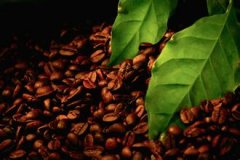
A brief introduction to the history and culture of the origin and development of fine coffee beans in Santa Cruz Manor with balanced acidity.
In the mid-15th century, there were legends about enchanted mysterious islands among fishermen fishing in the western Pacific Ocean of South America. It is said that the islands can sometimes be seen clearly from a distance, but when the ship approaches, it disappears again; sometimes it looks like a galleon, sometimes it shows the shape of a witch. The fishermen called these islands Magic Island and thought it was there.

Flavor characteristics, producing areas and cooking parameters of single bean in Santa Cruz Manor, Ecuador
For the exchange of professional baristas, please pay attention to the coffee workshop (Wechat official account cafe_style) Ecuador Santa Cruz Manor single bean flavor characteristics, producing areas and brewing parameters as coffee is consumed by people all over the world, the world coffee industry is also moving towards mass production mode, while St. Cristobal, a small coffee industry with uncertain quality, is in trouble, which is likely to end up.

Ecuador coffee flavor producing area Manor Introduction Fine coffee processing method Processing method
In 1875, 340 years after Frei Thomas de Berlanga discovered the island, an indigenous man named Cobos arrived on San Cristobal Island, where he established the Hassenda Coffee Plantation and planted about 100 hectares of Arabic bourbon trees. Because the plantation is located between 140 meters and 275 meters above sea level, the climate is equivalent to the climate between 915 meters and 1830 meters inland.